By :Nsereko Uthuman
Presentation:
In the present advanced age, extricating message from pictures has become progressively significant. Whether you’re a visual planner, advertiser, or content maker, having the option to separate and control text from pictures can save you time and upgrade your inventive strategy. Canva, a famous visual communication device, has perceived this need and presented a strong component that permits clients to remove message from simulated intelligence pictures consistently. In this article, we will investigate the moves toward extricate text from a picture in Canva utilizing computer based intelligence innovation, empowering you to saddle the maximum capacity of your plans.
Stage 1: Getting to the Canva Plan Stage
To begin, guarantee you have a functioning Canva account. In the event that you don’t have one, make another record by visiting the Canva site (www.canva.com) and joining. Whenever you’re signed in, you’ll approach the full scope of highlights and abilities Canva offers.
Stage 2: Transferring a Picture
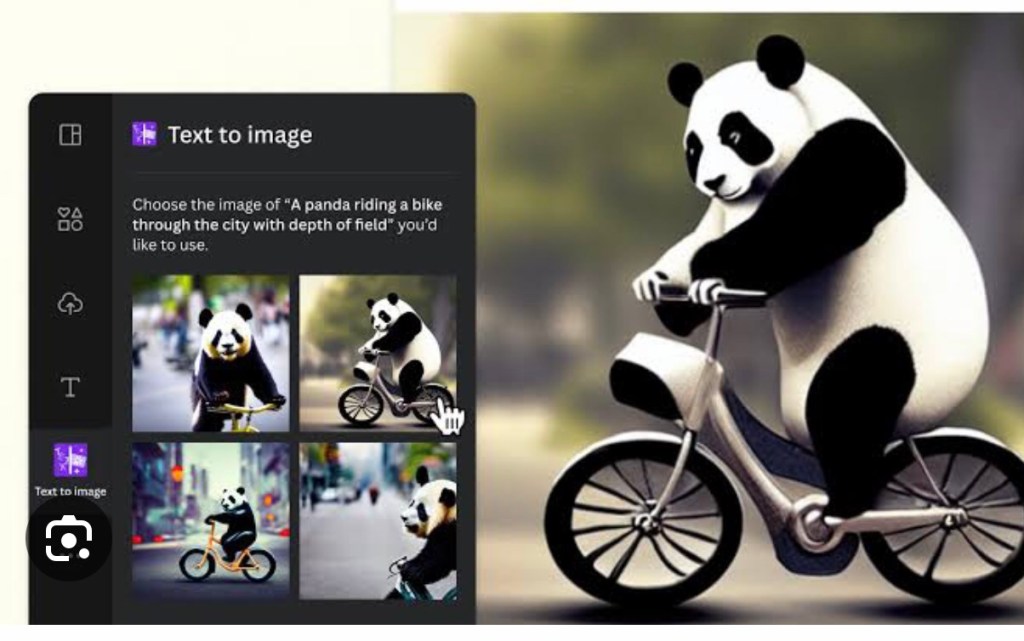
Now that you’re signed in, explore to the Canva landing page and snap on the “Make a plan” button. Select the fitting plan design, for example, web-based entertainment post, flyer, or show, contingent upon your prerequisites. Whenever you’ve picked your plan design, click on the “Transfers” tab on the left-hand side of the screen and select the picture from which you need to remove text. Canva upholds an extensive variety of picture designs, including JPEG, PNG, and GIF. Example. Extract an image of an operator driving an excavator.

Stage 3: Empowering man-made intelligence Text Extraction
After the picture has been transferred, you want to initiate the man-made intelligence text extraction include. To do this, select the transferred picture on the plan material, and a toolbar will show up at the highest point of the screen. Search for the “Text Concentrate” choice and snap on it. Canva will start the artificial intelligence text extraction process, investigating the picture to recognize and remove any noticeable text.
Stage 4: Checking on and Altering Extricated Text
When the artificial intelligence has finished the extraction cycle, Canva will show the extricated text on a different board on the right-hand side of the screen. You can audit the extricated text and make any fundamental alterations or remedies. This step is urgent to guarantee precision, as simulated intelligence text extraction may every so often miss or misjudge specific characters.
Stage 5: Integrating Separated Text into Your Plan
With the removed text accessible, you can now integrate it into your plan. Canva gives an assortment of content editing choices, permitting you to change text style styles, sizes, varieties, and organizing to line up with your plan idea. You can put the removed text in any ideal area inside your plan material, resize it, and apply other plan components to improve its visual allure.
Stage 6: Improving the Extricated Text with Canva’s Highlights
Canva offers many extra highlights and instruments to upgrade the removed text further. You can investigate different text impacts, like shadows, diagrams, and slopes, to make the text stick out. Also, Canva’s broad library of pictures, symbols, and outlines can be utilized to supplement the removed text, making it outwardly staggering and connecting with plans.
End:
By utilizing the force of computer based intelligence text extraction in Canva, you can save time and smooth out your plan cycle. Removing text from pictures considers more noteworthy adaptability and opens up a universe of innovative conceivable outcomes. Canva’s easy-to-use point of interaction and exhaustive plan highlights make it a significant instrument for originators, advertisers, and content makers trying to separate text from man-made intelligence pictures easily. So why not open the capability of your plans and begin investigating the conceivable outcomes of computer based intelligence text extraction in Canva today?
 Bashi Tech